
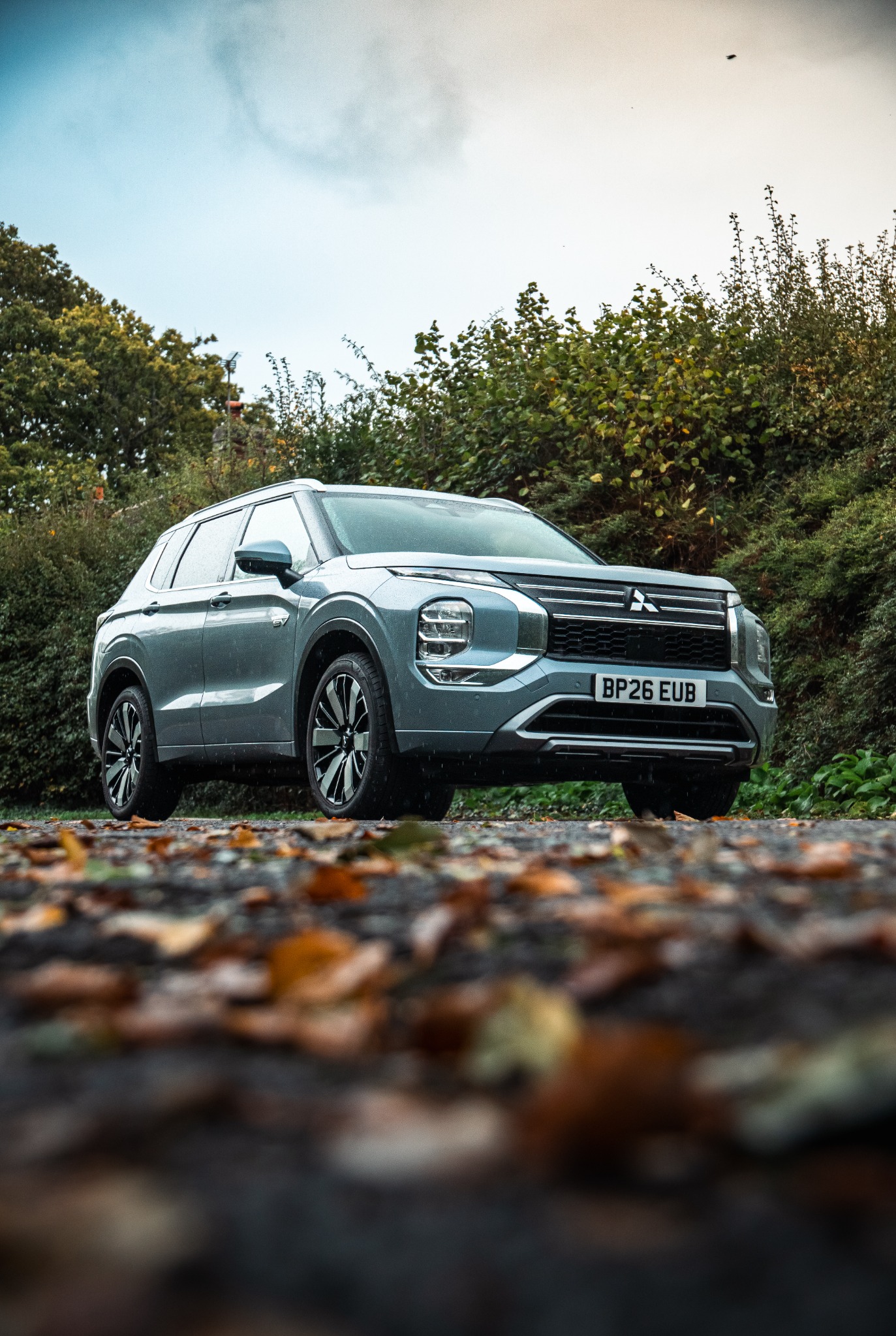
The 2026 Mitsubishi Outlander PHEV is back in the UK, and it has a lot to prove. It looks fantastic, feels genuinely premium inside and makes a surprisingly good family SUV. But there is one rather significant problem: what happens when the battery runs out?
Mitsubishi was once one of the biggest names in the UK plug-in hybrid market. The previous Outlander PHEV became a familiar sight on British roads, so its return is a big moment for the brand. But the market has changed considerably. There are now plenty of plug-in hybrid SUVs competing for family buyers, many promising impressive electric range and much better fuel economy.
For this review, I’m driving the range-topping 2026 Mitsubishi Outlander PHEV Diamond. It pairs a 2.4-litre petrol engine with electric motors, produces a combined 299PS and promises the sort of comfort, space and all-weather ability that should make it an excellent family car.
And in many ways, it is. I came away genuinely liking this car. But I also found a couple of things that make it difficult to recommend without some important caveats.

Mitsubishi is back in the UK – and the Outlander is leading the way
It still feels slightly unusual to be talking about a new Mitsubishi in the UK. The brand left the market, leaving plenty of owners wondering why, and now it has returned with two familiar names: the Outlander and the L200.
The Outlander has a particularly important job. Its predecessor helped establish the plug-in hybrid SUV as a mainstream family-car option, and this latest version needs to show that Mitsubishi can still compete in a much busier market.
There is a lot to like about the way it looks. The front end is bold, with a large grille, confident Mitsubishi badging and a lighting design that gives it real presence. I particularly like the way the styling takes cues from the latest Mitsubishi range while retaining something of the previous Outlander’s character.
Along the sides, the sculpted lines and indented lower bodywork give it a distinctive look without relying on acres of black plastic cladding. The 20-inch diamond-cut alloy wheels look excellent, although they do make this feel more like a smart family SUV than something you’d want to take seriously off-road.
The rear design is equally well judged. There isn’t too much chrome or piano-black trim, and the whole car has a cohesive, recognisably Mitsubishi appearance. In my opinion, Mitsubishi has done a very good job here.

Interior: A genuinely premium place to spend time
Open the door of the Diamond and the cabin makes a very good first impression. There is quilted leather or leather-effect trim across the seats and dashboard, a smart overall design and a feeling of quality that I wasn’t expecting to this extent.
The front seats are particularly impressive. They are electrically adjustable, have memory settings and offer heating, cooling and massage functions. They are comfortable and supportive, and feel like the sort of seats you’d expect in a considerably more expensive vehicle.
Technology is well integrated, too. There is a digital driver’s display, a 12.3-inch infotainment screen with Apple CarPlay and Android Auto, a head-up display and a surround-view camera system. The infotainment system was straightforward to use during my time with the car, and I didn’t experience the sort of bugs or frustrations that can make modern systems irritating.
More importantly, Mitsubishi has kept proper physical controls. The climate functions, heated and cooled seats and key driving controls have actual buttons rather than relying on haptic panels or burying everything in a touchscreen. I really appreciate that. You can learn where things are and operate them without constantly looking away from the road.
There is also an opening sunroof, plenty of headroom and a cabin that feels airy rather than cramped. The Yamaha sound system was another pleasant surprise: it sounds clear and punchy, and even the children’s favourite songs came across rather well.
Storage is generally good, with useful door bins and a decent glovebox. I would like to see some additional storage beneath the centre console, though, as that area feels like a missed opportunity.
Rear seats: A very convincing family SUV
This is where the Outlander really starts to make sense as a family car. There is a good amount of legroom and headroom in the back, and the rear cabin feels like somewhere an adult could happily spend a long journey rather than simply a space designed around children.
There are two ISOFIX positions, and the rear bench is wide enough to make fitting family seating arrangements feel realistic. During my inspection, there appeared to be enough room for two child seats with an adult in the middle, which is an important consideration for families who regularly travel with extra passengers.
There are useful little storage areas on the backs of the front seats for all the toys and bits and pieces that seem to accompany every family journey. The Diamond specification also adds heated rear seats, which is a lovely touch for passengers in the colder months.
One slightly odd detail is the rear centre armrest. When you fold it down to access the cupholders, the whole middle section of the seat comes down with it. It isn’t a disaster, but it is a strange arrangement.
Boot space: Room for the pram and the family luggage
The five-seat Outlander offers a claimed 781 litres of boot space, and it is a very useful shape. It is wide, has a practical opening and should be able to swallow a substantial family pram without too much trouble.
There is also a privacy cover to keep belongings out of sight. The test car was the five-seat Diamond, so there was no third row folded beneath the boot floor. The Outlander range is also available as a seven-seater in Nativa specification, which gives buyers the choice of more passenger capacity.
For families who need a large boot for pushchairs, bags, scooters and everything else that comes along for the ride, the Outlander is a strong proposition.
Plug-in hybrid range and efficiency: The big disappointment
Here is where my enthusiasm starts to become a little more complicated. On paper, the Outlander PHEV looks like a very capable plug-in hybrid. Its 2.4-litre petrol engine works with front and rear electric motors to produce a combined 299PS, and Mitsubishi quotes an impressive official plug-in hybrid fuel-consumption figure when the battery is charged.
But those headline figures only tell part of the story. As with any plug-in hybrid, the way you use and charge the car makes a huge difference. If you can charge at home and your regular journeys fit within its electric range, the Outlander can make a lot of sense. In my testing, I was seeing roughly 30 to 40 miles of realistic electric driving, which is enough to cover plenty of school runs and everyday local journeys.
The problem comes when the battery is depleted. Around town, I saw fuel economy fall as low as around 20mpg on some of my driving. On a longer run, using Eco mode and making the most of regenerative braking, I managed around 42–43mpg. That is a long way from the sort of efficiency I would hope to see from a modern plug-in hybrid family SUV.
Electric efficiency wasn’t especially impressive either. I saw around 3 miles per kWh at best during my testing, while the car’s own best-ever figure was higher. Conditions and driving style will obviously affect the result, but my experience was that the Outlander didn’t feel particularly frugal once you started looking beyond its headline figures.
That is frustrating because the rest of the car is so good. There are competitors using smaller petrol engines and delivering stronger efficiency once their batteries are depleted. If you regularly make longer journeys and cannot keep the Outlander charged, this is something you really need to consider before buying.
Charging: Why is there no CCS connector?
There is another issue that I find difficult to overlook: the Outlander uses a Type 2 connection for AC charging and CHAdeMO for DC rapid charging. It does not have the CCS connector that has become the familiar rapid-charging standard across much of the UK and European public charging network.
Type 2 is perfectly usable for charging at home or on an appropriate AC public charger. The problem is when you want to use rapid charging while travelling. CHAdeMO availability in the UK is much more limited than CCS, which makes finding a suitable rapid charger less convenient.
In my view, this is a strange decision for a new plug-in hybrid returning to the UK market. The Outlander is the sort of vehicle that could be used for family road trips, and better access to public rapid charging would make it more flexible. I would much rather see CCS fitted for the UK and European market.
It is particularly disappointing because the charging hardware and the rest of the car have clearly had a lot of thought put into them. The connector choice feels like a missed opportunity.
Driving: Much better than you might expect
One of the biggest surprises is how well the Outlander drives. For a large, heavy family SUV with a plug-in hybrid powertrain and four-wheel drive, it feels composed and genuinely enjoyable.
The steering is good, the throttle response is sharp and the car handles corners with far more confidence than you might expect. You don’t feel the weight of it as much as you might imagine, and the suspension does a good job of keeping everything comfortable and controlled.
The combined 299PS gives it plenty of performance for everyday driving. Mitsubishi quotes around 7.9 seconds for 0–62mph, although I saw quicker acceleration figures in my own testing using a Dragy. Either way, it feels responsive and has more than enough performance for joining a motorway or overtaking.
The brake pedal is slightly spongy at first, which I suspect is down to the transition between regenerative braking and the conventional brakes. It is something you notice, but it didn’t spoil the overall driving experience.
I was also impressed by the driver-assistance systems. They do their job without constantly shouting at you or intervening unnecessarily. The warnings are present when needed, but they are not overly intrusive. For me, this is one of the best balances I’ve experienced in a modern car.
Price, specification and the Mitsubishi warranty
The new Outlander PHEV starts at £46,995 in the UK, with the range-topping Diamond tested here sitting close to £50,000. The Nativa is the version to look at if you need seven seats, while the Diamond brings a more luxurious five-seat specification.
That is a substantial amount of money, particularly when some competing plug-in hybrid SUVs can be several thousand pounds cheaper. Mitsubishi is clearly pitching the Outlander as a more premium offering, and the interior quality, comfort and equipment do help justify some of that positioning.
Mitsubishi is also offering an eight-year or 100,000-mile warranty package on the new Outlander PHEV, whichever comes first. That is a meaningful part of the ownership proposition and should give buyers additional reassurance.
Even so, at this price I want the powertrain to be more efficient when the battery is empty, and I want a more convenient rapid-charging solution. Those are not small details for a plug-in hybrid family car.
The Automotive Dad verdict: A brilliant family SUV with one big problem
I have come away from the 2026 Mitsubishi Outlander PHEV with mixed feelings, which is frustrating because there is so much about it that I genuinely love.
It looks fantastic, the interior feels properly premium, the seats are excellent and there is loads of space for the family. The boot is enormous, the rear seats are comfortable and the driving experience is surprisingly good. The driver-assistance systems are also among the best calibrated I’ve used.
But the plug-in hybrid system doesn’t quite deliver where it matters most. If you keep it charged and mainly drive within its electric range, it can be a very pleasant and refined family car. Once the battery is depleted, the petrol engine’s economy can be disappointing. Add the CHAdeMO charging connector and the relatively high price, and the Outlander becomes a harder recommendation.
I wanted this to be a real winner. In so many ways, it is. The drive dynamics get an eight out of ten from me, while the engine and its efficiency are closer to a five. That pretty much sums up the experience: a fantastic SUV wrapped around a powertrain that needs a little more work.
If you have home charging, mostly make shorter journeys and want a comfortable, spacious, premium-feeling family SUV with four-wheel-drive capability, the Outlander deserves a look. If you regularly cover longer distances or rely on public rapid charging, I’d think carefully before signing on the dotted line.
The 2026 Mitsubishi Outlander PHEV is a very good family car. I just wish its plug-in hybrid system was as impressive as the rest of it.
Watch the full video review: Is This the BEST Plug-In Hybrid SUV? | 2026 Mitsubishi Outlander PHEV Review
Specifications and prices are based on UK-market information available at the time of writing. Real-world range and efficiency will vary with conditions, driving style and charging habits.
Compare more family plug-in hybrid reviews
Considering another plug-in hybrid family SUV? Read our LEPAS L8 review for a newer, more affordable alternative, or browse our hybrid and plug-in hybrid reviews. For a wider shortlist, see our best family cars in the UK for 2026 guide.
You must be logged in to post a comment.